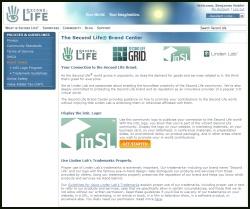
 After years of largely ignoring widespread use of its trademarks on everything from in-world groups to business web sites, Linden Lab recently announced the launch of the Second Life Brand Center, which features a new set of explicit, fairly restrictive guidelines regarding the use of the company’s trademarks.
Some residents are upset, and with at least some cause. There are a lot of very large groups and institutions with names that are implicated in this change in policy, most of which chose those names at least partly because Linden Lab did not appear to be interested in policing these marks until now. Organizations that potentially are subject to the new guidelines (if they have not secured written permission to use the marks) include the Second Life Herald, Reuters Second Life, Scripters of Second Life, the University of Second Life, Business Women of Second Life, the Arts Council of Second Life, Real Life Education in Second Life, Bisexuals in Second Life, and even the informal professional association I started in 2006, the Second Life Bar Association. A quick count of group names and web sites reveals thousands, if not tens of thousands, of instances of potential infringement.
Here are the highlights of the new guidelines, with a little explanation:
- Residents in good standing are allowed to use “SL” and “inSL” in business and organization names and domains as long as they are used with at least two generic nouns, or your own mark. So “SL Bar Association” is okay, but “SL Lawyers” is not. Using your own mark lets you get down to one word, so “Dell SL” is okay, but “Computer SL” is not. Acronyms of otherwise acceptable names can be used as domains.
- Residents are not allowed to register any trademark that includes SL in this context — which adds a whole new layer of complexity to the SLArt trademark registration issue that Thayer Preece, one of VB’s guest writers, covered in detail in January.
- Residents are not allowed to use the eye-in-hand logo or the term “Second Life” without written permission. I’m guessing that isn’t going to be easy to get, since Linden Lab appears to be taking steps to protect these specific trademarks now. Organizations with “Second Life” in their name may want to consider a name change or explore the written permission option, if they have not already.
- Finally, they say that they’d like you to put a ® symbol after “Second Life” and a ™ symbol after their unregistered trademarks (including Linden, LindeX, and SLurl) when you use the terms “in text,” and you’re also supposed to follow “Second Life” with a generic noun. For example, you are now asked to refer to “the Second Life® world…” instead of “Second Life.” This is widely misunderstood. The request is not enforceable against news organizations or most non-product-oriented blogs. It can only be enforced if there is potential brand confusion (e.g. in advertising for another product).
That last bullet regarding the is use of the ® symbol “in text” is confusing to a lot of people and is worth exploring a little further. It does not mean that every news story and blog post about Second Life needs to include these symbols. You only have to follow these requests when your use isn’t considered “nominative.” Basically, when brand confusion is possible — in advertising. The key is that use of the marks in news coverage and analysis is considered “nominative use,” and doesn’t require any license at all — so they don’t get to tell you how to use the words in that context. The AP Stylebook guidelines say that trademarked names should be capitalized in text, which is appropriate because it helps avoid genericide (and angry letters from lawyers) but that’s really all commentators and reporters need to do in text. Note though: like any other brand identifiers, blog banners, names, and graphics are subject to the rules pointed out in the other bullet points above.
While it is unfortunate that Linden Lab waited so long to do this, the reality is that they have the right, and probably the obligation, to police these marks. If they do not enforce their rights now, they risk an abandonment argument later.
One could actually argue that the four-plus years they’ve encouraged the use of some of these marks constitutes abandonment, though it’s not a strong argument. If one was in the mood to fight, a better argument would be “estoppel” — essentially, that because Linden Lab encouraged the use of the marks (e.g. in text accompanying their fansite toolkit) and people took action based on that, that Linden Lab can’t now change its mind without at least paying for the financial damage caused by the change. Lawsuits are expensive though, and the fight is probably not one that many Second Life-based organizations are going to be willing to take on.
My conclusion? Although there might well be a legal argument available if somebody wanted to try to make it, most users are going to be better off simply taking steps to move into compliance with Linden Lab’s new policy.
Toward that end, I will be asking the Second Life Bar Association to lead by example. Although I do not set the organization’s policy and my term as president recently ended, I will ask that the group (which is now headed by U.K. firm Field Fisher Waterhouse’s David Naylor, as Second Life Avatar ‘Solomon Cortes’) either seek written permission to use “Second Life” in our name, or else to consider using the name “SL Bar Association” to make sure we’re in compliance. I’ve secured “SL Bar Association” as a Second Life “Group” name in case that’s the route the organization takes. Other organizations with names that are potentially subject to this policy may want to consider securing the “SL” version of their group name as well before someone else grabs it. Happily, our domain name, slba.info appears to fall within the license for “SL.”
To its credit, Linden Lab has given organizations 90 days to analyze the policy and take any necessary steps before it begins enforcement.
March 28, 2008 – Edited to add information regarding potential estoppel claim.
 Today, March 31, is the last day to register for the Virtual Law Conference in New York City, April 3-4. Registration ends at 11:59 eastern time (8:59 Pacific). Your registration fee for the conference also covers entrance to the “Virtual Worlds 2008” conference (which runs concurrently) and all associated events. According to the organizers, over 1100 people have registered from over 600 companies. If you register today, the cost is $895. On-site registration (if there is still space) will be available starting at 7:30 AM the first day of the conference, and will cost $1295.

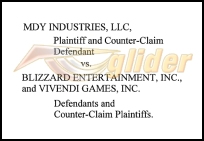 Blizzard and MDY Industries have filed key motions in their lawsuit over the popular World of Warcraft automation program “WoW Glider” (since renamed “MMO Glider”). Exhibits include an expert report supporting Blizzard from Indiana University’s
 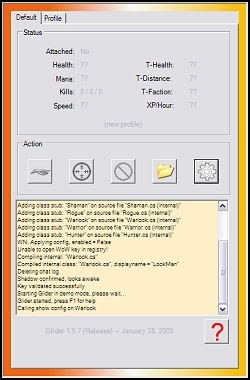 MDY originally filed this lawsuit in federal court in Arizona seeking a