Subscribe to
Posts
Comments

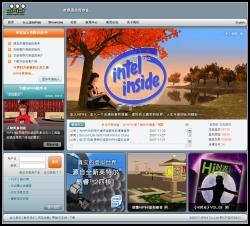
HiPiHi Intel GraphicChinese news source Pacific Epoch reports that global semiconductor superpower Intel opened a store on November 22 in the Beijing-based virtual world HiPiHi (a Chinese virtual world similar to Second Life). Intel is the first IT enterprise to set up shop in HiPiHi. Intel plans to build a 160,000 square meter virtual island and open an Intel experience center, activity center, and partner club for the virtual community.

With all of the intellectual property and privacy law issues surrounding Second Life, there are bound to be some really interesting legal developments arising from HiPiHi, especially in light of the authoritarian Chinese government’s ongoing surveillance and content control of the Internet, and HiPiHi’s plan to allow IP ownership. I’ll be keeping an eye on all virtual world legal developments in China for VB, and will provide updates as they arise.

While the broadband markets in the U.S. and China are comparable (107 million users in China and 101 million in the U.S.), that number constitutes only 14 percent of China’s population, compared to the nearly saturated U.S. market, where approximately 71 percent of Americans already have Web access. The growth potential is astounding, and HiPiHi potentially could easily dwarf Second Life in terms of user numbers.

Intel and HiPiHi said they will release Intel notebooks and mobile Internet devices in the 3D world. Not clear yet what this will entail, but imagine logging into HiPiHi, sitting down at your HiPiHi/Intel notebook and using it to log into Second Life. The rabbit hole may have just gone a little deeper!

For those interested, check out this YouTube video showing off the HiPiHi world.

Email This Post Email This Post
Print This Post (Printer Friendly Formatting) Print This Post (Printer Friendly Formatting)


Related Posts on Virtually Blind

Second Life Law SchoolUnder the guidance of Founder and Dean ‘Julynn Lilliehook,’ the Second Life Law School has opened its virtual doors, and is now accepting new students.

Real-life law students are encouraged to join, but ‘Lilliehook’ notes on the school’s blog that “SLLS is a place for ANYONE to learn [because] everyone should understand the law.”

The SLLS already boasts newly donated in-world space and the aforementioned blog. ‘Lilliehook’ says that she plans to keep the law school “accessible to everyone who wishes to learn the general princples of law in the United States as well the legal systems around the real life world.” Virtually Blind interviewed ‘Lilliehook’ regarding the school.

Virtually Blind: What is the Second Life Law School?

Julynn Lilliehook: Second Life Law School is where I hope many everyday people come to learn about how law intersects their daily lives. It is a place for everyone interested in learning about the law, not just for real life law students or real life legal professionals.

VB: Why did you start it?

'Julynn Lilliehook,' Founder and Dean of SLLSJL: In Second Life, as in real life, I find many people have little understanding of the law. I wanted to speak and teach about law in Second Life and created SLLS as a forum. I also wanted a place to hold mock jury trials of real life cases with SL residents as jurors. I read an article in the ABA Journal about Second Life and the potential for mock trials, which is what prompted me to join SL.

VB: Is there a role-playing aspect to the project? Can students play “law student” there?

JL: No, it’s not a role playing situation. Only legal professionals will be teaching or speaking at SLLS. However, anyone is welcome to join and become a “student.” There are no exams, no grades, no graduation, and no degree.

VB: Are you making your real name and background known and if so, can you tell VB’s readers a bit about yourself?

JL: I do not use my real name or details in SL, but I will do so here since it is not in-world. In real life, I am Suzanne Edwards, a licensed attorney with a solo law practice. My law practice is primarily criminal law at both the trial and appellate levels.

VB: Are you concerned about ethical questions regarding holding yourself out as running a virtual law school?

JL: No, I do not have any ethical concerns about running a fictional/virtual law school no more than I would expect those who run “adoption agencies” or deal in the slave trade on SL. Second Life is for the most part, still a game for me.

VB: Do you have any long term visions of accreditation for the school?

JL: No, I do not see that as a goal.

VB: Is there anything else you’d like to tell VB readers about the school?

JL: No individual legal advice will be given. My goal is to educate people to avoid legal problems, not to help them out of a situation they are already facing. I also would love to have lawyers come to try out their legal theories on mock juries or to polish their trial advocacy skills. Current RL law students are also encouraged to join and get help as they are studying for their law degrees.

Email This Post Email This Post
Print This Post (Printer Friendly Formatting) Print This Post (Printer Friendly Formatting)


Related Posts on Virtually Blind

Eros v. Leatherwood CaptionA default judgment (.pdf) was recently entered for Eros, LLC of Lutz, Florida against defendant Robert Leatherwood of North Richland Hills, Texas, by the United States District Court for the Middle District of Florida.

Eros originally brought the suit against a fictitious defendant (also known as a “John Doe” defendant) who was identified in the complaint only as Second Life avatar “Volkov Catteneo.” Eros claimed the user controlling the Catteneo account had made and offered for sale unauthorized copies of Eros’ popular adult avatar animation products.

Eros named Leatherwood as its “John Doe” defendant in this case after subpoenas to Second Life provider Linden Lab, PayPal, AT&T, and Charter Communications led to computers in two locations allegedly used by Leatherwood.

Leatherwood, who originally protested his affiliation with the Catteneo account in a Tampa Tribune article, did not answer or otherwise respond to the copyright and trademark infringement complaint in the 20 days alloted by the Federal Rules of Civil Procedure (FRCP 12). The default judgment was entered against him pursuant to FRCP 55. Reuters reported that Eros would seek default judgment earlier this month, shortly before default was entered.

A default judgment operates largely the same as a judgment on the merits, allowing Eros to seek damages, fees, and injunctive relief, and to use the judicial system to pursue Leatherwood’s assets to satisfy an award.

Email This Post Email This Post
Print This Post (Printer Friendly Formatting) Print This Post (Printer Friendly Formatting)


Related Posts on Virtually Blind

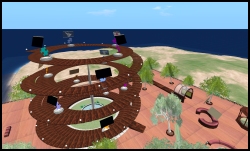
Lovells Pro Bono ExhibitionAs part of Pro Bono Week (Nov. 12-17), Lovells, a major international law firm, recently opened a pro bono exhibition in Second Life (via LawFuel). It’s an interesting, nontraditional build, and it does a good job highlighting Lovells’ pro bono efforts. Worth visiting (SLURL).

Email This Post Email This Post
Print This Post (Printer Friendly Formatting) Print This Post (Printer Friendly Formatting)


Related Posts on Virtually Blind


Page 44 of 87« First...«4243444546»...Last »