Subscribe to
Posts
Comments

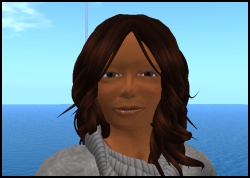
Benjamin Duranske's SL Avatar, 'Benjamin Noble' As part of ramping back up to full-time coverage at VB, I’m going to do some minor site updates, and update my virtual world presence.

Nothing drastic re: the site — an updated banner, a few visual tweaks, and some behind-the-scenes WordPress patches that I’ve been putting off. Let me know if you have any suggestions (particularly if you pay attention to what’s current with Wordpress). Also shoot me a note if you want to let me know about your site, as I am overhauling my link list.

I’m updating my Second Life virtual world presence a little bit too — also nothing drastic. I’m looking for two things. First, a place for a small office, and second, a professional, realistic “animation override.”

Regarding the office, I used to maintain the SL Bar Association’s original office on the mainland, in a sim called Sallow. It was actually “first land” back when they let you do that, and it was a great location. I had Governor Linden protected land on one side, and a brothel in the sky (with a nice forest of trees at eye level) on the other. When ‘Beathan Vale’ donated space in his Justice Center build for new SLBA offices, I sold the plot to the Madame next door, and as result, I now have a 512m account I prepay every year, but no land.

I’d like to find something on the mainland, maybe with some historical significance. Having protected land or water on one side would be ideal, and I am willing to pay a bit of a premium for the right spot. I know… call me crazy, but I’m actually a sucker for ground-level builds on the mainland.

Regarding my avatar, I’m looking for a good, professional animation override, or, more likely, a collection of animation override parts that work together. The problem I have is that all of the male animation overrides I have found tend to run to one extreme or the other — they either make the avatar look like he’s terribly shy or else like he’s itching for a bar fight.

Suggestions for both, including self-promoting links to your Second Life stores and land sales operation, are welcome.

Email This Post Email This Post
Print This Post (Printer Friendly Formatting) Print This Post (Printer Friendly Formatting)


Related Posts on Virtually Blind

Dotted Line


ABA LogoThis is a repost to remind readers that tomorrow, June 24, from 10:00 AM to 12:00 noon Pacific time (1:00 PM to 3:00 PM Eastern) I am moderating a teleconference on “Why Virtual Worlds Matter for Lawyers” sponsored by the American Bar Association’s Section of Science & Technology Law and Section of Intellectual Property Law. We have four outstanding panelists who will address key issues in virtual law and take your questions, and I hope a lot of readers can make it either via the traditional dial-in system or in-world in Second Life.

The audio teleconference will be available via the traditional dial-in system (and registration for that is the only way to get CLE credit), but the conference will be actually taking place in Second Life at the new Justice Center (SLURL), where participants will be able to participate in “backchat” during the call and meet other legal professionals interested in virtual worlds.

Anyone can attend the session free in Second Life. We don’t know how many will attend the in-world event, so arrive early if you want to make sure you get a seat.

We have a great line up of panelists, each of whom brings a different perspective. The panelists are:

  • David Elchoness, Executive Director, Association of Virtual Worlds; Founder and CEO, VRWorkplace.com, Boulder, CO
  • Lauren Gelman, Executive Director, Stanford Law Center for Internet and Society; Lecturer in Law, Stanford University, Stanford, CA
  • Steve Mortinger, VP & Associate General Counsel, IBM Systems & Technology Group, Somers, NY
  • Francis Taney, Chair, Technology Litigation Practice Group; Shareholder, Buchanan Ingersoll & Rooney, PC, Philadelphia, PA

The teleconference is part of the ABA’s ongoing continuing legal education (CLE) series, and is offered for a fee of between $80 and $165 depending on your ABA and section membership status. Participants will earn 2.0 or 2.4 hours of CLE credit hours in most states, and the Justice Center in Second LifeABA is also offering people who register for the teleconference 20% off my book, Virtual Law.

You do not have to sign up for the teleconference to attend the in-world event, though CLE credit and the book discount are only available to those who sign up for the telecon. Similarly, attendance at the in-world event is not necessary for participation in the teleconference, though it is a great opportunity to get your feet wet in a virtual world if you haven’t yet. Although the event will be targeted at attorneys, I suspect it will be of interest to most VB readers, and I encourage you to either sign up for the teleconference or drop by the Justice Center in Second Life (SLURL) tomorrow, if you’re interested.

Email This Post Email This Post
Print This Post (Printer Friendly Formatting) Print This Post (Printer Friendly Formatting)


Related Posts on Virtually Blind

MDY v. Blizzard CaptionVB has obtained Blizzard’s response (.pdf) to the amicus curaie (”friend of the court”) brief filed last month by Public Knowledge in the MDY v. Blizzard litigation. For the background of this suit, see VB’s complete coverage of MDY v. Blizzard.

Blizzard’s chief argument in this brief is that making a copy of software into RAM can be prohibited when software is licensed to users (rather than sold to them) under a 9th Circuit case, MAI Systems Corp. v. Peak Computer, Inc., 991 F.2d 511 (9th Cir. 1993). Blizzard argues that although owners of software are allowed to load copies into RAM in order to use the software, it is not selling World of Warcraft software to users, but rather licensing that software, and that “MAI and its progeny accept at face Blizzard Logovalue that where software is subject to a license, the right to copy that software is licensed, not owned, and software developers may restrict the right to copy their software into RAM the same way they may restrict the right to copy in any other manner.”

For its part, Public Knowledge argued (.pdf) that based on a number of cases drawn from somewhat disparate fact patterns, the court must consider “the totality of the circumstances surrounding the transaction, including the presence and terms of any license, the relationship of the parties, and other external factors which may indicate the Public Knowledege Logopresence or absence of a sale” in making this determination.

This is an important issue with implications that go well beyond this dispute. Although it has not put the issue in quite such stark terms, Public Knowledge is essentially seeking a ruling that says that the sale of consumer software is, in most circumstances, a sale, pretty much regardless of what the agreement that comes with the software says. If the court agrees in spite of MAI and its progeny (and the ruling survives certain appeal) then U.S. copyright law would protect, among other things, making copies of purchased software in RAM in order to use the software — no matter what the “license agreement” says. Resolving this issue in favor of Public Knowledge would call into question provisions in EULAs governing nearly every virtual world and multiuser online game, as well as EULAs for other software.

The court has not invited any further briefing, but this issue will likely be a big part of oral argument, scheduled for June 26.

Note: If any of VB’s Arizona law student or attorney readers would consider covering the argument June 26, I would very much like to run something. Drop me a note if you are in the Phoenix area, and could plan to attend and write a guest spot.

Email This Post Email This Post
Print This Post (Printer Friendly Formatting) Print This Post (Printer Friendly Formatting)


Related Posts on Virtually Blind

MDY CaptionVB has obtained an order (.pdf) issued by the judge in MDY v. Blizzard requiring World of Warcraft creator Blizzard to respond to a brief critical of a key argument in its case against bot-maker MDY.

The argument under attack is Blizzard’s claim that software which loads World of Warcraft in a computer’s memory creates a copy, and thus violates Blizzard’s copyright. The brief Blizzard has been ordered to respond to was filed last month by Public Knowledge, a digital rights advocacy group. Though Public Knowledge’s brief was styled as an amicus curaie (”friend of the court”) brief in support of neither party, the brief focused exclusively on questions regarding Blizzard’s somewhat controversial copyright claim. Public Knowledge’s argument was amplified in MDY’s subsequent briefing.

For background, see VB’s complete coverage of MDY v. Blizzard.

The issue is essentially this: Blizzard claims that when third-party programs like MDY’s Glider (which automates certain World of Warcraft tasks) load World of Warcraft software into a computer’s RAM, that “creation of a copy” violates the copyright Blizzard holds in its software.

Public Knowledge argues “that Blizzard doesn’t have a claim on copyright grounds because the right of users to make the copy for use by the computer is already guaranteed by law. [...] Therefore, Blizzard cannot claim any infringement of its copyrights based upon the creation of RAM copies because the right to make those copies was never Blizzard’s to license in the first place.”

The brief appears to have caught the attention of the Court, which wrote:

Public Knowledge argues that WoW users are owners of the WoW software they purchased and therefore do not infringe copyright by using their software in a manner authorized by 17 U.S.C. § 117. MDY Industries and Michael Donnelly make the same argument in their reply brief. The Court will require Blizzard Entertainment and Vivendi Games to respond to this argument.

Oral argument on this motion is scheduled for June 26 in Phoenix.

Note: If any of VB’s Arizona law student or attorney readers would consider covering the argument June 26, I would very much like to run something. Drop me a note if you are in the Phoenix area, and could plan to attend and write a guest spot.

Email This Post Email This Post
Print This Post (Printer Friendly Formatting) Print This Post (Printer Friendly Formatting)


Related Posts on Virtually Blind

Family PictureVirtually Blind will be relatively quiet for the next few weeks as my wife and I adjust to being parents. Our first child, a darling little girl we’ve named Charlotte, joined us very early this morning.

She and her mom (who made a rare virtual world appearance last week for this screenshot) are both doing great.

Of all the rotten things parents can do to a newborn, I suppose that posting a tiny, pixelated, round-headed avatar picture on a geeky law blog on the internet is right up there. So, my darling Charlotte, when you find this via search in seven or eight years, know I posted it with love and that I really do, deep down in my heart, understand that I am way less cool a dad than I think I am in my weaker moments.

VB will be back to normal in a bit. In the meantime, advice, encouragement, and ideas for automating this whole “changing” thing are welcome.

Email This Post Email This Post
Print This Post (Printer Friendly Formatting) Print This Post (Printer Friendly Formatting)


Related Posts on Virtually Blind

Second Life Land MapThis edition of VB’s Reading Room features a new, notable paper on virtual property by recent Columbia Law School graduate Daniel Gould. The paper is entitled Virtual Property in MMOGs (.pdf).

In the paper, Gould argues that recognition of a limited set of virtual property rights would benefit both users and virtual world companies, and sets forth both legislative and case law-based paths to that recognition.

From Virtual Property in MMOGs:

For a statutory solution, a dual sovereignty approach modeled on the Indian Civil Rights Act is advanced, in which most disputes would be adjudicated in-world. For common-law expansion with respect to virtual land in particular, it is advised to adapt a model from existing real property forms, such as a fee simple with reversion, a long-term lease, or a housing cooperative.

Gould covers the key arguments for the existence of virtual property in the first half of the paper with particular focus on the Bragg case, but it is the latter half, where he looks at various paths toward legal recognition of virtual property, that really jumps out as innovative.

The paper is a working draft, and Gould would very much appreciate constructive feedback.

On a personal note, I have to say that I’m really pleased to see that the paper footnotes the first paper hosted in VB’s Reading Room, Kevin Deenihan’s “Leave Those Orcs Alone” (now also available at SSRN). VB’s Reading Room is designed for exactly this purpose — to make new papers, particularly papers that haven’t yet been widely distributed, broadly available to the growing field of attorneys and scholars interested in virtual law. If you have a published or unpublished paper you’d like to have hosted here, drop me a note.

Email This Post Email This Post
Print This Post (Printer Friendly Formatting) Print This Post (Printer Friendly Formatting)


Related Posts on Virtually Blind

A post at SLUniverse announces that attorney Frank Taney will be talking about “Trademarks for Virtual World Related Businesses” in Second Life on Friday, June 6 from 2:30 to 4 pm Pacific time at UBM Think Services’ home (SLURL).

From the post:

Frank will address a variety of topics sure to be of interest to Second Life residents, including the use of trademarks to build value in a virtual world brand, Linden Lab’s trademark policy, proper use of trademarks, and avoidance of trademark infringement.

Frank TaneyFrank, a partner at Buchanan Ingersoll & Rooney, represented Eros LLC and other content creators in two “avatar v. avatar” cases last fall, and has a number of other virtual world clients. He did a Q&A earlier this year on intellectual property issues that was well attended and informative, and this promises to be a good session.

Email This Post Email This Post
Print This Post (Printer Friendly Formatting) Print This Post (Printer Friendly Formatting)


Related Posts on Virtually Blind

Last year, an ambiguous 9th Circuit ruling in Fair Housing Council v. Roommates.com muddied the waters of Section 230 immunity under the Communications Decency Act by suggesting that if a provider selects which content to allow or edits user created content, it could lose immunity for content it misses, and thus be held liable for it. A new en banc 9th Circuit ruling in Roommates.com clarifies the earlier ruling and establishes that neither a) removing objectionable content, nor b) deciding not to post certain content causes a provider to lose CDA immunity for user content that is posted.

9th Circuit SealThe original ruling raised questions for virtual world providers, particularly Linden Lab, which runs Second Life. Linden Lab was, at that time, in the middle of instituting a policy of removing certain “broadly offensive” user-created content from its world — the company’s first real attempt to regulate any aspect of Second Life. Since then, Linden Lab clarified that policy, and also took it upon itself to remove casino equipment, banking equipment, objects that allegedly infringe trademarks and copyrights, references to sexual ageplay and gambling in user profiles and place locations, the words “Lolita” and “Poker” from classified ads (regardless of context) and much more. Each of these decisions, under the previous Roommates.com ruling, potentially exposed Linden Lab to increased liability.

Linden Lab was, presumably, gambling that the 9th Circuit would ultimately clarify this ruling in favor of immunity for providers who edit and filter some content. That gamble appears to have been a good one.

Under the new ruling, providers are explicitly not held responsible for material they miss when they edit for objectionable content. This means that the gap in immunity last year’s ruling seemed to leave for providers who “edit” content has been closed, and my analysis last year that the former ruling could leave Linden Lab on the hook for editing user content to remove references to sexual ageplay is no longer a concern. Assuming they meet all the other requirements of the law, virtual world providers are not on the hook for any content they miss when they edit user profiles — and even user-owned land and objects — to remove objectionable content.

Read the rest of the post »

Email This Post Email This Post
Print This Post (Printer Friendly Formatting) Print This Post (Printer Friendly Formatting)


Related Posts on Virtually Blind

Metaverse Journal LoglThe Metaverse Journal posted a podcast on legal issues in virtual worlds today. It features an interview with Dr. Melissa de Zwart, Law Faculty Senior Lecturer at Australia’s Monash University.

This is a great podcast covering a wide range of topics, and it is particularly nice to get an international perspective on these issues.

Email This Post Email This Post
Print This Post (Printer Friendly Formatting) Print This Post (Printer Friendly Formatting)


Related Posts on Virtually Blind

ABA LogoI am happy to announce that next month I am moderating a teleconference on “Why Virtual Worlds Matter for Lawyers” sponsored by the American Bar Association’s Section of Science & Technology Law and Section of Intellectual Property Law. The teleconference, scheduled for June 24 from 10:00 AM to 12:00 noon Pacific time, will be available via the traditional dial-in system, but will be actually taking place in Second Life at the new Justice Center (SLURL), where participants will be able to participate in “backchat” during the call and meet other legal professionals interested in virtual worlds.

We have a great line up of panelists, each of whom brings a different perspective. The panelists are:

  • David Elchoness, Executive Director, Association of Virtual Worlds; Founder and CEO, VRWorkplace.com, Boulder, CO
  • Lauren Gelman, Executive Director, Stanford Law Center for Internet and Society; Lecturer in Law, Stanford University, Stanford, CA
  • Steve Mortinger, VP & Associate General Counsel, IBM Systems & Technology Group, Somers, NY
  • Francis Taney, Chair, Technology Litigation Practice Group; Shareholder, Buchanan Ingersoll & Rooney, PC, Philadelphia, PA

The teleconference is part of the ABA’s ongoing continuing legal education (CLE) series, and is offered for a fee of between $80 and $165 depending on your ABA and section membership status. Participants will earn 2.0 or 2.4 hours of CLE credit hours in most states, and the Justice Center in Second LifeABA is also offering people who register for the teleconference 20% off my book, Virtual Law.

You do not have to sign up for the teleconference to attend the in-world event, though CLE credit and the book discount are only available to those who sign up for the telecon. Similarly, attendance at the in-world event is not necessary for participation in the teleconference, though it is a great opportunity to get your feet wet in a virtual world if you haven’t yet. Although the event will be targeted at attorneys, I suspect it will be of interest to most VB readers, and I encourage you to either sign up for the teleconference or drop by the Justice Center in Second Life (SLURL) on June 24 at 10:00 Pacific, if you’re interested.

Email This Post Email This Post
Print This Post (Printer Friendly Formatting) Print This Post (Printer Friendly Formatting)


Related Posts on Virtually Blind


Page 4 of 31« First...«23456»...Last »