Defendant Named in Eros Intellectual Property Suit
October 25th, 2007 by Benjamin Duranske
 Eros, LLC has filed an amended complaint (.pdf) naming Robert Leatherwood, of North Richland Hills, Texas, as the John Doe defendant previously known only by a Second Life avatar’s name, ‘Volkov Catteneo.’ A summons (.pdf) was also issued. Eros is owned by Kevin Alderman (‘Stroker Serpentine’ in Second Life).
Alderman confirmed the identification of newly-named defendant Leatherwood as the person he and Eros’ attorney Frank Taney believe controls the ‘Catteneo’ account. Alderman said that Leatherwood denies that he is ‘Catteneo.’
Richard Slatkin of Fort Worth, Texas, a private investigator hired by Eros, served Leatherwood with the summons and complaint Thursday morning, according to Alderman. Slatkin reported that Leatherwood is nineteen and lives with his grandmother, great-grandmother, and uncle.
Leatherwood admits that he uses Second Life, and has offered several different explanations of his relationship with the ‘Catteneo’ account in an attempt to address two IP traces that ended at different locations where he is known to log on to Second Life, including his home. In an article in the Tampa Tribune, Leatherwood first said that ‘Catteneo’ was a “hacker” who gave him access to the account, and that he would not reveal the hacker’s real name in case ‘Catteneo’ sought revenge. Later, he stated that he would give up the name if he knew it, but that he does not know it because ‘Catteneo’ and he only interacted in Second Life. Two days earlier, according to the article, Leatherwood told Eros’ attorney that he did not know ‘Catteneo’ at all.
Alderman said, “I am saddened that Leatherwood doesn’t understand the severity of his actions and the evidence we have against him. Witness statements, Linden Lab account information, and numerous corroborating sources assure us we have our guy. If he continues to deny his guilt we will seek the full damages afforded to us by law, which are considerable. Regardless of his current financial situation, a prevailing judgment will follow him until satisfied. We offered an extremely amicable and affordable settlement, that would have required a fractional monetary compensation.”
Reuters reported that the Leatherwood family said they needed to speak to an attorney, and that Eros planned to go forward with discovery (which would likely include an early deposition of the defendant) in 20 days, if no settlement had been reached by that point.
‘Catteneo’ (allegedly Leatherwood) previously admitted to a Reuters reporter that he had copied and sold at least 50 of the allegedly infringing items but claimed that his identity was not discoverable because he had provided false information to Linden Lab. Based on earlier filings, it appears that Eros discovered his identity via his IP address, which was provided by Linden Lab and PayPal, and traced to his account via his internet service provider.
‘Catteneo’ did not immediately respond to an in-world interview request, and VB was unable to reach Leatherwood by telephone.
For background information on this lawsuit (an intellectual property claim originally naming a fictitious defendant because the alleged infringer was only known by the name of his Second Life avatar) see VB’s previous coverage.
[Updated 10/25 and 10/26 to add comments from Kevin
Alderman and information from external sources.]


Related Posts on Virtually Blind
- Eros v. Leatherwood Update – Default Entered: "A default judgment (.pdf) was recently entered for Eros, LLC of Lutz,..." (6 comments)
- Eros Reaches Settlement With Robert Leatherwood a/k/a Second Life’s ‘Volkov Catteneo’: "Eros, LLC, a Second Life adult-animation creator, has reached a..." (2 comments)
- Linden Lab Produces Documents Responsive to Eros’ Subpoena in SexGen Intellectual Property Suit: "Second Life creator Linden Lab is complying with Eros LLC's subpoena..." (10 comments)
 Last night’s Second Life-centered CSI:NY episode was exactly what it was supposed to be: an entertaining 42 minute cops and robbers network television show that touched on law and technology, without exploring either in depth. Regular readers will recall that I don’t like these shows generally, so it shouldn’t be a surprise that I didn’t like this one much either. That said, I was no more disappointed in the legal wrangling (far faster than in reality) or the depiction of technology (predictably over the top) than I am when I watch any mainstream television show that riffs on subjects I’m familiar with.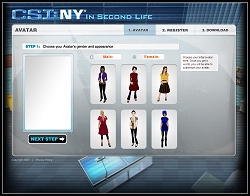

 Second, Bryan Camp, Professor of Law at Texas Tech University, recently discussed taxation of virtual world commerce with more of a U.S. focus as part of the
  Practicing Law Institute is offering a
