Non-Profit “Virtual Intellectual Property Organization” Opens Office in Second Life
January 27th, 2008 by Benjamin Duranske
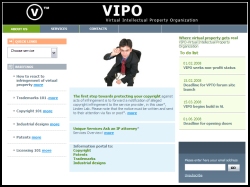 A new, non-profit, legal services organization, the Virtual Intellectual Property Organization (VIPO), has opened in Second Life. VIPO advertises that it offers “accessible legal advice concerning virtual property, trade and commerce and the use of real life intellectual property in virtual worlds.” VIPO is the brainchild of Tamiko Franklin (Second Life’s ‘Juris Amat’). Franklin was born and raised in Columbus, Ohio, and earned a Bachelor of Arts in Linguistics from Antioch College, and a J.D. and Master of Intellectual Property from Franklin Pierce Law. She is currently Director of International Legal Services for Matijevich Law Offices in Zagreb, Croatia and Director General of the VIPO. VB interviewed ‘Amat’ by email. “VB” is Virtually Blind, “JA” is ‘Juris Amat.’
VB: In very general terms, what is the Virtual Intellectual Property Association, and why did you start it?
JA: VIPO is a virtual intellectual property legal services organization. I started VIPO to support artistic and scientific creation in virtual worlds. During my initial visits to Second Life I noticed that despite the enormous amount of creation occurring, there was a lack of resources available to resident intellectual property owners. I was most surprised that there was no registry where they could record or deposit copies of their creations. My first intention with VIPO was to host a registry forum, as time went on however, it seemed more important to have an organization that provided access to professional guidance in the area of intellectual property.
VB: I understand that you, personally, are an attorney who specializes in intellectual property issues. Can you tell readers a bit about yourself?
 JA: I’m a Massachusetts attorney living in southeast Europe, Croatia, where I work for a small law firm specialized in intellectual property management including administration, enforcement and transactions. My practice centers around international intellectual property transactions and related corporate services such as portfolio evaluation and management.
VB: Specifically, what are some of the services that VIPO will offer?
JA: VIPO offers consultations on outside world intellectual property protection as well as management of virtual property in world. We have assisted resident authors in structuring license agreements, drafting cease and desist notes, even protecting musical works and works of visual art while also providing information regarding related rights.
VB: Which one of VIPO’s services are you most excited about? Can you give readers more detail about your plans for that service?
JA: I’m most excited about our Customs Service. This is part of a new Virtual Property and Trade division that offers virtual trademark watch services and consultations on virtual property and trade to outside world corporations and legal entities. The reasoning being that while residents need assistance with how to navigate and maximize their virtual property rights in the outside world, corporations require navigational assistance in world and we think that we are uniquely qualified to provide realistic and effective advice.
VB: I’m particularly interested in your plans regarding dispute resolution and enforcement of intellectual property rights. What are you hoping to see in the long term there?
JA: I hope to see an effective court system put into place. I’ve only recently learned of the progress made by the Metaverse Republic in creating software that supports enforcement in the judicial system envisioned by the group. I’m particularly excited, however, to know that construction of a Supreme Court is underway. I’m certain, due to the level of expertise behind these ongoing efforts, that something useful for IP enforcement purposes will be created in the not so distant future.


Related Posts on Virtually Blind
- Interview: Attorney Tamiko Franklin (‘Juris Amat’) Discusses Involvement in SLART Trademark Case: "As Second Life's 'Juris Amat,' attorney Tamiko Franklin founded the..." (0 comments)
- SLPTO Offers Second Life Content Creators Suite of Intellectual Property Protection Tools: " The Second Life Patent & Trademark Office, has opened its doors,..." (17 comments)
- Movable Life’s Terms of Service Claim Ownership of Intellectual Property Created Using Viewer: "Movable Life is a relatively new web-based Second Life viewer run by..." (8 comments)
 Not only has Minsky registered the mark (for which a notice of allowance recently issued) but he has also allegedly been speaking with people who use the terms “SLART,” “slart,” and “SLart” to refer to art in Second Life in order to accuse them of trademark infringement and threaten them with legal action. Minsky is using the SLART trademark in-world and in connection with his
 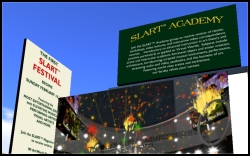 Based on the spectrum of trademark protection above, I can imagine what most people are thinking — “wait a minute, the term ‘SLart’ is generic! Or at the very least, descriptive, so how did it get registered?” Bloggers have claimed that the word SLart has been in common use to describe art in Second Life for quite some time. If this is the case, then most likely the term is generic, and should not be available to trademark. However, a search on Google for the term “SLart” does not actually reveal many generic uses of the word. There are many references on the web to Minsky’s SLArt publication, as well as a few uses by other Second Life users, but no great slew of common uses of the word to point to in support of a claim that the word is generic.
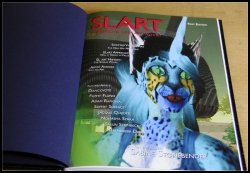 I think it should be clear that a term meaning “Second Life Art” when used on a publication that is at least in part about art in Second Life, should be considered descriptive. So how, one might ask, did this mark get approved? After reviewing the prosecution history for the mark, it looks like the trademark examiner simply dropped the ball on this one.
 There’s a new battleground emerging for Second Life copyright claims: protest screenshots of in-world ad farm installations.
 I personally feel DMCA claims are all-too-often abused, though they certainly do have their place. As a writer covering these spaces (who regularly finds it helpful to illustrate articles with pictures) I must acknowledge my instinct, and desire, that screenshots of public spaces in virtual worlds, particularly newsworthy screenshots, not be subject to DMCA takedown claims. Happily, this is not an instinct in a vacuum; though untested, the law probably supports this position. That’s good news for virtual shutterbugs.
 Perhaps most importantly, “fair use” provides a huge exception here under either analysis.
 As of today, it has been exactly one year since I wrote my
  I was one naive blogger when I started doing this. It didn’t even occur to me that it might be nice to know how many readers VB was getting until the site had been running for almost a month. The first day that I installed a stat package was February 19, 2007. On that day, VB was visited by exactly 75 people. That seemed like plenty for a site like this. I was absolutely ecstatic a few days later when daily readership broke 100. I had no idea what was about to happen.
 For the first few months, the site’s banner tagline read “Justice, Law, and Politics of Virtual Worlds.” An earlier version included “Economics,” too. I changed it to “Virtual Law | Legal Issues that Impact Virtual Worlds” because I discovered that I didn’t have any real interest in covering politics or economics. I also wanted to focus attention on the term “virtual law,” since nobody seemed to know what to call this emerging field. (I figured that readers could puzzle out “blind justice” on their own.) It turned to be one of the best early decisions I made about the site; with everything that happened this year, VB could not possibly have tracked a broader portfolio.
 On a personal note, my avatar in Second Life (the virtual world that I visit most often) changed quite a bit over the last year. Thanks to a custom skin and a new pair of glasses that match mine almost perfectly, it looks a lot like me now (at least when my real-life hair is cut short). An aside for Second Life users struggling to get a professional look for a male avatar — consider getting a high-quality skin that includes texture-based hair, if you don’t mind a close-cropped look. Your mileage may vary, but I have yet to find prim-based hair that doesn’t make my avatar look like he’s a stage magician in his off time.
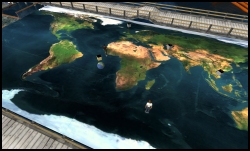 About 65% of VB’s traffic comes from the United States. The U.K. and Canada account for another 15%. Another 15% come from Australia, Germany, the Netherlands, Italy, Japan, Spain, and France combined. The other 5% comes from everywhere else. That includes exactly one non-automated visit from each of the following countries/territories: Andorra, Mauritius, French Polynesia, Saint Vincent, Ecuador, Anguilla, Togo, Myanmar, Rwanda, Antigua, Maldives, Belarus, Honduras, Bahrain, Kenya, San Marino, Uruguay, and Suriname. These visits, particularly, make me happy.
 #5.
#5.  #4.
#4.  #3.
#3.  #1.
#1.  #3. The
  #2. Regina’s Lynn’s WIRED “Sex Drive” column,
  #1.
#1. 
